Elena Albrecht · 28 September 2026
Warsaw University Links Ignite Enzyme Research and Student Innovation Prizes Across Polish Networks
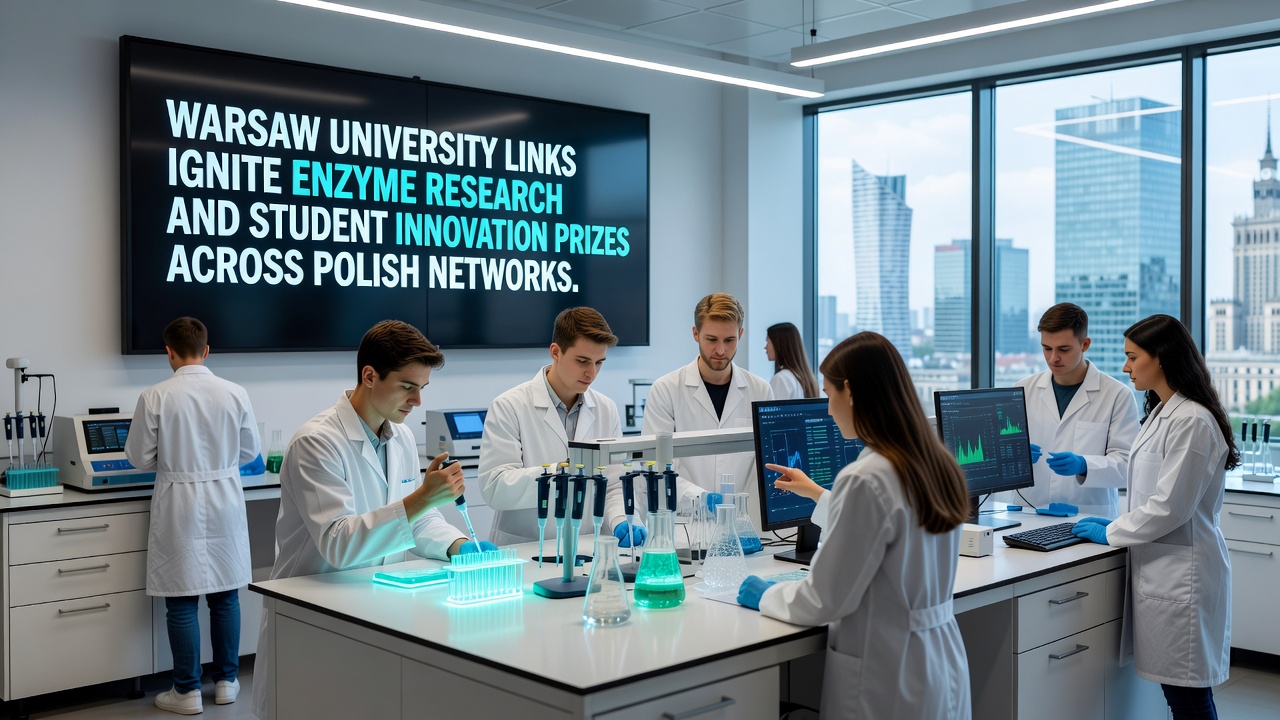
Connections forged through Warsaw University have sparked coordinated enzyme research initiatives and a wave of student innovation prizes that now span multiple Polish academic networks, with activity intensifying ahead of planned gatherings in September 2026. Data from the European Commission shows these partnerships draw on shared laboratory resources and joint funding streams that link Warsaw with institutions in Krakow, Gdansk, and Wroclaw, allowing teams to tackle enzyme stability and industrial applications more efficiently than isolated groups could manage alone.
Network Growth and Resource Sharing
Polish universities have expanded formal agreements since 2023 that route equipment access, postdoctoral exchanges, and data repositories through Warsaw as a central hub, and observers note that this structure reduces duplication while accelerating protocol validation across sites. Researchers at partner campuses report faster turnaround on enzyme purification trials because samples and analytical results move through standardized channels rather than starting from scratch at each location. The same framework supports student teams who compete for innovation prizes that reward both technical novelty and cross-institutional collaboration.
Enzyme Research Focus Areas
Current projects concentrate on enzymes suited for bio-based manufacturing, agricultural processing, and pharmaceutical intermediates, with working groups publishing joint findings on thermostable variants and directed-evolution methods. Figures from the Polish Ministry of Science and Higher Education indicate that coordinated grants awarded in the last two budget cycles have supported more than thirty enzyme-related studies involving at least four universities each. Teams have documented improved yields in pilot-scale reactions after implementing shared computational models developed in Warsaw and refined at regional labs.
Student Innovation Prize Mechanisms
Prize competitions now operate on an annual cycle that begins with regional qualifiers and culminates in a national showcase, and students must demonstrate both an enzyme application prototype and evidence of collaboration with at least one external Polish network partner. Award criteria include scalability assessments and intellectual-property strategies, which evaluators review alongside technical performance data. In 2025 the top entries featured enzyme-assisted textile recycling and low-temperature dairy processing, both developed by teams that included members from Warsaw, Poznan, and Lublin.
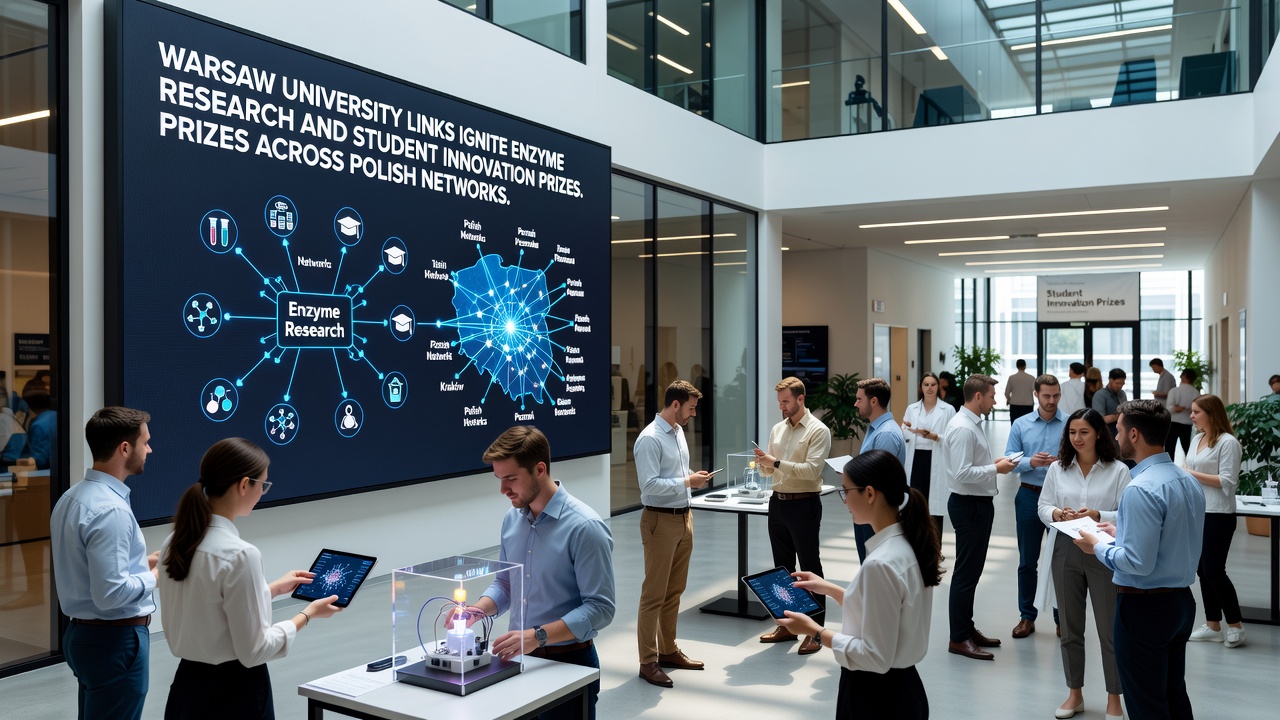
Training workshops held throughout the year prepare entrants for these events by covering experimental design, regulatory pathways, and presentation skills, while mentors from industry and academia rotate across host cities to maintain consistent guidance. Participation numbers have risen steadily, with registration records showing a 40 percent increase between 2024 and 2025 cycles according to internal university reports.
September 2026 Outlook
Planning documents list a multi-day conference and prize ceremony for September 2026 that will gather participants from all linked networks in Warsaw, and organizers expect expanded sessions on enzyme engineering for circular economy applications plus live demonstrations from student finalists. Preliminary schedules include keynote addresses from international collaborators and panel discussions on funding mechanisms that have sustained the network so far. Registration portals open in early 2026, with priority slots reserved for teams that have already contributed to ongoing joint publications.
Supporting Data and External Benchmarks
National statistics compiled by the Polish Ministry of Science and Higher Education place enzyme-related outputs from these networks at roughly 18 percent of the country's total biotechnology publications in 2025, up from 9 percent in 2022. Parallel tracking by the Natural Sciences and Engineering Research Council of Canada notes similar growth patterns in comparable multi-institution programs, suggesting the Polish model aligns with established international practices for distributed research. Funding summaries further reveal that European Union framework contributions account for the largest share, supplemented by national and regional sources that together exceed 45 million euros across the active grant portfolio.
Conclusion
Warsaw University's role as connector has produced measurable expansion in both enzyme research capacity and student prize activity throughout Polish networks, with concrete outputs documented in grant reports and publication records. The September 2026 events will provide the next checkpoint for assessing continued progress under the current collaborative structure.