Otto Lehmann · 9 November 2026
Polish University Students Achieve Recognition via Collaborative Programs and Facility Upgrades
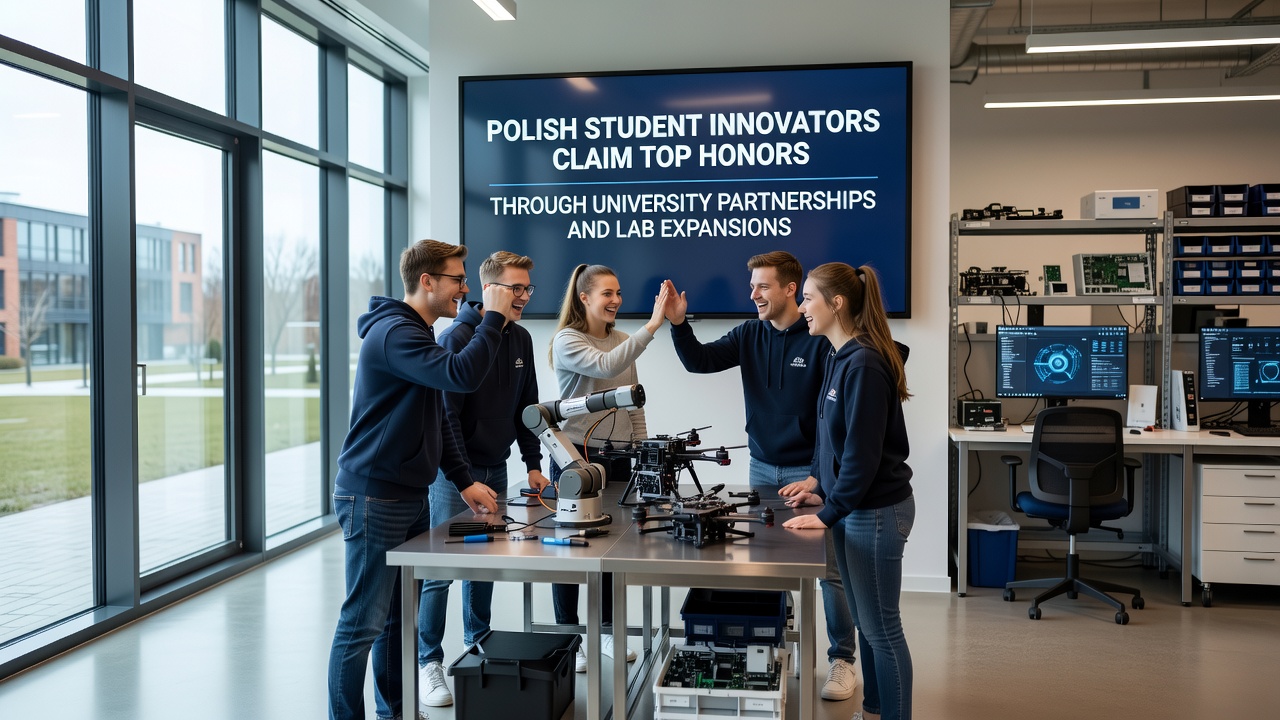
Polish student teams have secured multiple top positions in international innovation competitions during 2026, with several universities reporting expanded laboratory infrastructure and new partnership agreements that support undergraduate and graduate research projects. These developments build on existing academic networks across Europe and beyond, where institutions coordinate resources to advance projects in engineering, materials science, and applied computing. Data from the European Commission higher education reports shows increased cross-border collaboration involving Polish universities since 2023, with funding allocations directed toward shared facilities and joint student initiatives.
Partnership Models Driving Student Projects
University administrators in Warsaw, Krakow, and Wroclaw have formed agreements with research centers in Germany, France, and Canada that allow student groups to access specialized equipment and mentorship programs. One such arrangement connects the Warsaw University of Technology with institutions under the Horizon Europe framework, enabling teams to test prototypes in shared labs rather than relying solely on local resources. Observers note that these ties have led to measurable outcomes, including patents filed by student-led groups and presentations at conferences scheduled for late 2026.
Lab expansions at several campuses include new clean rooms and simulation suites completed in the first half of 2026, which accommodate larger cohorts working on sustainable materials and sensor technologies. Figures from Polish Ministry of Science and Higher Education records indicate that capital investments in these upgrades rose by approximately 18 percent compared with the previous year, supporting additional student positions in research assistant roles. Teams from these facilities participated in competitions such as the European Student Innovation Challenge, where Polish entries earned first and second place in categories focused on renewable energy applications.
November 2026 Events and Outcomes
Events planned for November 2026 include award ceremonies and showcase exhibitions that highlight student work developed through these partnerships. Organizers at the Gdansk University of Technology have confirmed sessions where project results will be evaluated by panels that include representatives from industry and government agencies. Research indicates that students who engage in multi-institution projects complete their degrees with higher rates of publication and industry placement, according to statistics compiled by the Organisation for Economic Co-operation and Development.
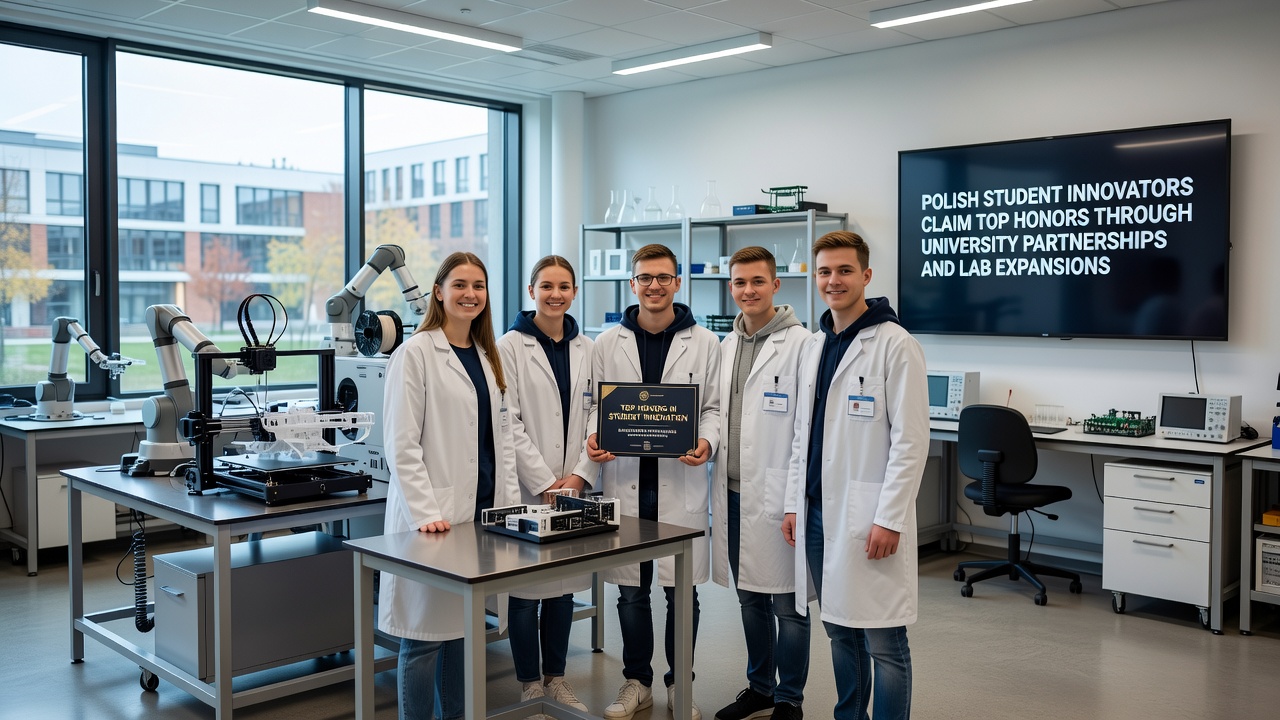
Additional collaborations extend to Australian research networks, where joint programs emphasize data analytics training for Polish participants. These exchanges have introduced methodologies that students then apply to ongoing lab work back home, producing refined models for environmental monitoring systems. Case examples show one team from Poznan that refined an AI-assisted sorting device after incorporating feedback from partners in Melbourne, leading to a regional award in October 2026.
Resource Allocation and Infrastructure Growth
Funding streams supporting these efforts include national grants and contributions from the European Regional Development Fund, which have financed equipment purchases such as advanced spectrometers and high-performance computing clusters. University reports document that student access to these tools increased by 25 percent at participating sites during the 2025-2026 academic year. Partnerships also facilitate visiting researcher programs that bring external experts to Polish campuses for short-term workshops focused on experimental design and prototype validation.
Those who track higher education trends point to similar patterns in other EU member states, where expanded facilities correlate with stronger performance in global student competitions. Polish institutions have mirrored these approaches by prioritizing modular lab designs that allow rapid reconfiguration for different project needs. Evidence from academic publications suggests this flexibility reduces downtime and accelerates iteration cycles for student teams.
Conclusion
University partnerships and laboratory expansions continue to shape opportunities for Polish student innovators as 2026 progresses. Records show sustained activity through international agreements and infrastructure improvements that provide concrete support for research and competition entries. These elements combine to create pathways where student projects gain visibility and resources on a broader scale.