Otto Lehmann · 14 September 2026
Poland's Enzyme Breakthroughs Spark Fresh Biotech Lecture Waves Across Warsaw Ties
Poland has recorded notable advances in enzyme engineering over the past two years, and these developments have triggered a series of specialized lectures that now run through academic venues across Warsaw, with several sessions already scheduled for September 2026. Universities and research institutes in the capital report higher attendance at biotechnology events, while faculty members coordinate joint programs that connect laboratory results with public presentations.
Key Enzyme Discoveries Reported by Polish Teams
Teams at institutions including the University of Warsaw and the Polish Academy of Sciences have isolated and modified enzymes capable of operating at elevated temperatures and in industrial solvents, according to data released by the Polish Ministry of Science and Higher Education. One project produced a variant of lipase that maintains activity above 70 degrees Celsius, a property that opens pathways for more efficient biofuel processing and pharmaceutical synthesis. Researchers documented these outcomes in peer-reviewed journals and shared preliminary metrics showing yield improvements of 18 to 25 percent compared with earlier commercial strains.
Additional work focused on cellulase complexes extracted from local microbial sources, and tests conducted in collaboration with the European Commission's Joint Research Centre demonstrated faster breakdown of agricultural residues. Figures released by the Centre indicate that the modified enzymes reduced processing time by roughly 30 percent under standardized conditions. These results have circulated through European research networks and prompted invitations for Polish scientists to present findings at conferences in Germany and the Netherlands.
Lecture Series Expanding Across Warsaw Campuses
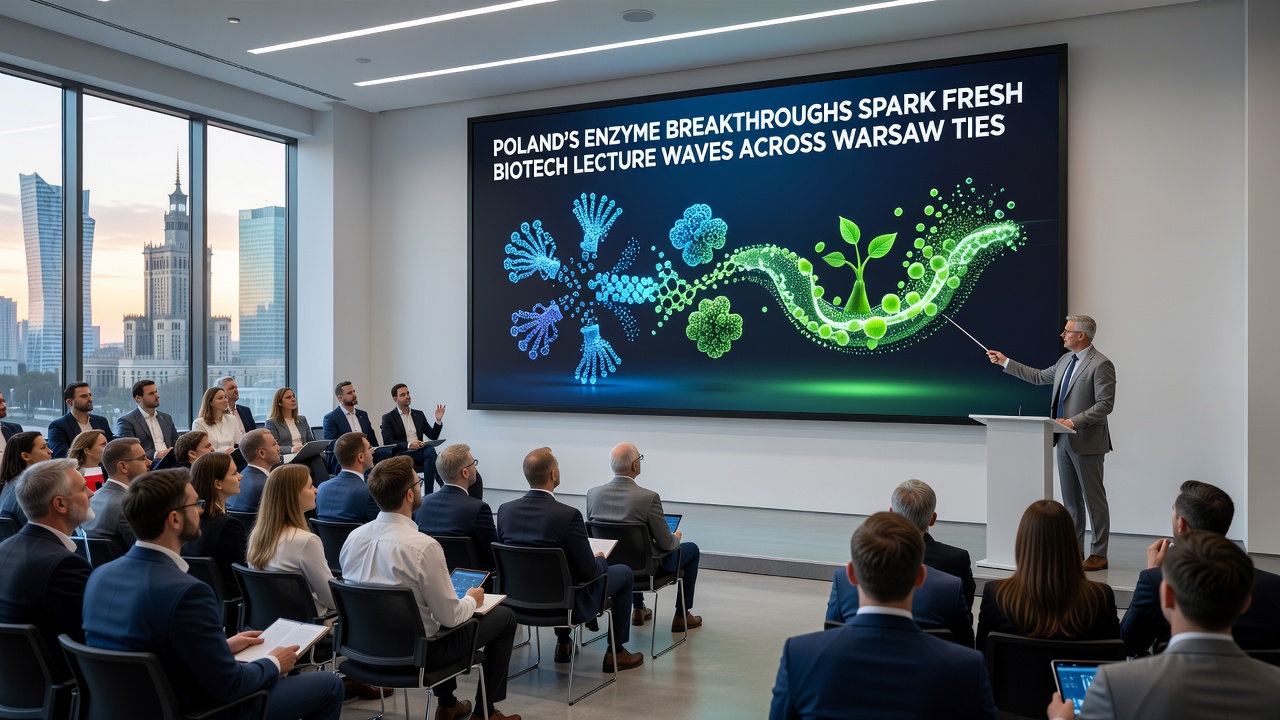
Academic organizers responded to the laboratory progress by expanding public lecture programs, and the University of Warsaw's Faculty of Biology now hosts monthly sessions that draw participants from industry and government agencies. Attendance records kept by the faculty show an increase from 120 visitors per event in early 2025 to more than 300 in the most recent cycle. Speakers present data on enzyme kinetics, discuss scale-up challenges, and review regulatory pathways for enzyme-based products within the European Union market.
Warsaw University of Technology has introduced a parallel series focused on industrial applications, and its Department of Chemical Engineering coordinates with local companies to schedule demonstrations that illustrate enzyme performance in pilot reactors. Session materials reference studies published by the National Institutes of Health in the United States, which provide comparative benchmarks on enzyme stability under continuous operation. Organizers note that these cross-institutional links help translate laboratory metrics into practical engineering guidelines.
September 2026 Schedule and Broader Regional Connections
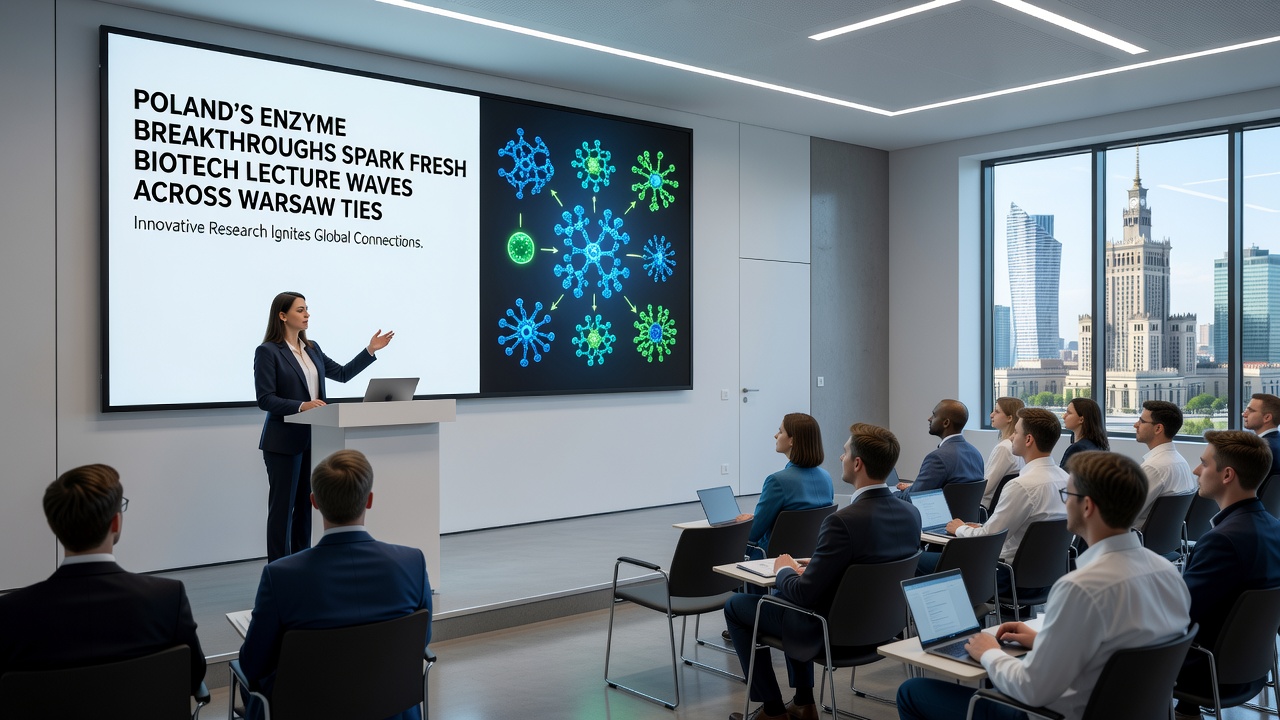
Planning documents circulated among Warsaw institutions list at least twelve confirmed lectures for September 2026, covering topics from directed evolution techniques to downstream purification methods. The first event, hosted at the Copernicus Science Centre auditorium, will feature results from a multi-year study on thermostable proteases, while later sessions address regulatory updates from the European Food Safety Authority. Registration data collected so far indicate that roughly 40 percent of participants come from outside Poland, reflecting growing international interest in the region's research output.
Cooperation agreements signed with universities in Sweden and Canada have added virtual components to several presentations, allowing real-time data exchange during live discussions. These arrangements build on earlier exchanges that began in 2024, and they have produced joint publications that compare enzyme performance across different climate and feedstock conditions. Observers note that such partnerships help standardize measurement protocols and reduce duplication of experimental effort.
Industry and Funding Landscape
Private sector involvement has increased alongside the academic program, with several Warsaw-based startups licensing enzyme variants for use in detergent formulations and textile processing. Reports from the Polish Investment and Trade Agency list three new facilities under construction that will incorporate the recently characterized enzymes, projecting combined annual production capacity exceeding 5,000 metric tons by 2028. Funding for these projects draws from both national grants and Horizon Europe allocations, which together supported 14 enzyme-related initiatives in Poland during the 2023-2025 period.
Data compiled by the European Commission show that Poland's share of biotechnology patents filed under the Patent Cooperation Treaty rose from 1.8 percent in 2020 to 3.1 percent in 2024, with enzyme technologies accounting for a substantial portion of the increase. Patent examiners in Brussels have cited improved documentation standards and clearer experimental controls as factors that facilitated faster review cycles.
Conclusion
The sequence of enzyme discoveries, followed by expanded lecture programming, has created a sustained platform for knowledge exchange in Warsaw that continues into 2026. Institutions maintain records of participation and outcomes, while international links supply comparative data that strengthen local research efforts. Continued coordination among universities, government agencies, and industry partners supports the ongoing dissemination of findings through scheduled presentations and collaborative projects.